
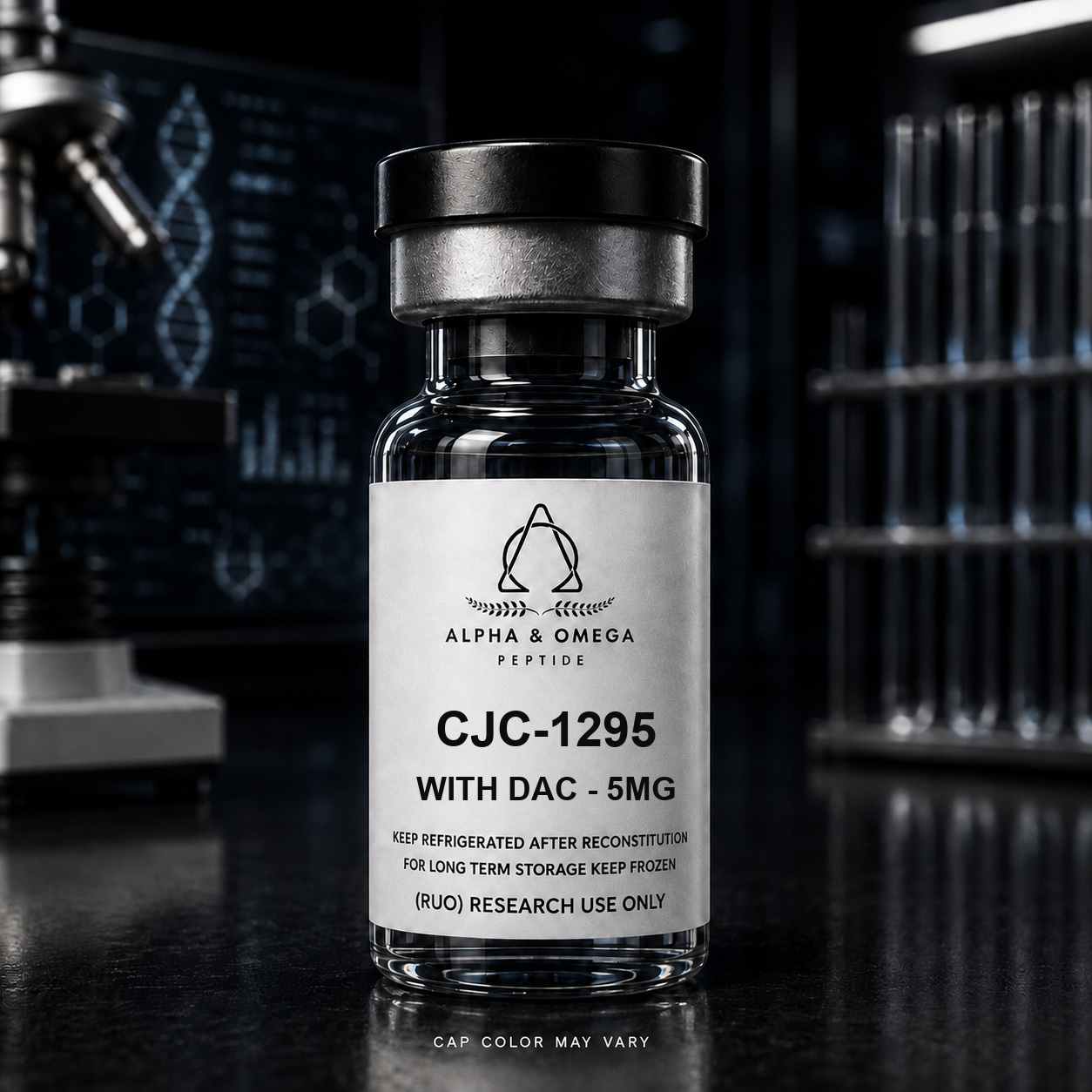
cjc 1295 no dac is the primary catalogue term for CJC-1295 w/ DAC 5MG. This page provides factual product-identification, terminology and documentation context; the name alone does not verify composition, quality, authorisation or suitability.
CJC-1295 w/ DAC 5MG: identity, terminology and catalogue context
What the catalogue record confirms
The supplied record confirms the displayed name. It does not, by itself, verify the manufacturer, country of origin, exact chemical form, component ratio, excipients, sterility, purity, analytical assay, storage limits, shelf life or intended use. Those details should be copied from current manufacturer documentation, not inferred from common naming conventions or another seller’s listing.
Scientific identity and interpretation
CJC-1295 is described in research as a modified growth-hormone-releasing hormone analogue. Published human studies have assessed growth-hormone and IGF-1 responses after defined investigational administration. Such pharmacodynamic observations do not establish long-term safety, clinical benefit or equivalence between DAC and non-DAC variants.
Evidence status: Human evidence: limited pharmacodynamic research; not evidence of broad clinical benefit.
Formulation-specific limitations
The export does not include a manufacturer specification, certificate of analysis, complete ingredient declaration, impurity profile, stability data or independent identity testing. These details should be supplied before making claims about purity, quality, sterility, suitability or exact equivalence to published study materials.
For a multi-ingredient listing, the evidence review should be organised ingredient by ingredient. A paper on one named component is not a study of the complete blend. The exact formulation would require a protocol or trial that matches all ingredients, proportions, route, dose form and manufacturing specification. In the absence of such a study, describe the formulation as a catalogue combination only and do not use words such as synergistic, enhanced, clinically proven or more effective.
How to read the research responsibly
When evaluating a publication, first identify the exact material studied: full chemical name, sequence or molecular form, purity, formulation, route and dose. Next identify the model: isolated cells, animal model, healthy volunteers or patients with a defined diagnosis. Then check whether the endpoint was a laboratory biomarker, a physiological response, a patient-reported measure or a clinically meaningful outcome. These categories are not interchangeable. A mechanistic paper can explain why researchers are interested in a molecule without showing that a product has a useful or safe effect in people.
Study design also matters. Randomised controlled trials with appropriate comparators generally provide stronger causal evidence than uncontrolled observations. Small sample sizes, short follow-up, selective outcomes, lack of blinding and incomplete adverse-event reporting reduce confidence. Reviews can help map a field, but their conclusions depend on the quality and comparability of the underlying studies. If a review discusses several formulations or routes, its conclusions should not be applied indiscriminately to this exact catalogue item.
Product documentation and quality questions
Before this page makes a factual statement about quality or suitability, the business should hold a current specification that matches the item being sold. Depending on the product type, relevant records may include a full ingredient declaration, chemical identity and sequence, batch-specific certificate of analysis, assay method, impurity profile, microbial limits, sterility or endotoxin testing where applicable, excipient list, container information, stability data and manufacturer instructions. For laboratory reagents, the grade, concentration convention, pH, solvent, hazard classification and safety data sheet are particularly important. For devices, dimensions, materials, calibration, sterility, single-use status, intended purpose and instructions for use are central. For oral or dissolving formats, amount per unit, excipients, disintegration characteristics and route-specific stability should be documented.
A certificate or test report should be traceable to the batch supplied. A generic certificate, a supplier statement without method details or a document for a different product strength is not enough to substantiate a product-specific claim. Where documents are unavailable, the correct editorial approach is to state that the specification has not been provided rather than to fill the gap with an assumption.
Regulatory and publication context in the United Kingdom
Regulatory status depends on the exact substance, presentation, intended purpose, claims and circumstances of supply. A research description does not make a product lawful to supply or advertise, and adding a “research use” disclaimer does not automatically resolve the legal position. UK medicine advertising rules restrict public promotion of prescription-only medicines and unlicensed medicines. Any product that may be a medicinal product, an unlicensed medicine or a medical device should undergo a product-specific review by an appropriately qualified UK regulatory adviser before publication or sale. Do not imply MHRA authorisation, pharmacy status, clinical suitability or a therapeutic indication unless documentary evidence supports the precise statement.
What this page can and cannot establish
This page can identify the catalogue wording, explain relevant terminology, summarise the research landscape at a high level and identify missing documentation. It cannot verify the contents of a particular vial, capsule, strip or reagent bottle; certify a batch; establish sterility; determine clinical suitability; or replace a regulator’s classification. It also cannot transfer evidence from a different route, dose, formulation or population to this listing. Readers should use the manufacturer’s current documentation and relevant regulatory sources for decisions about product identity and status.
Frequently asked questions
Does research on each ingredient prove the blend has the same effects?
No. The combination requires its own evidence. Ingredient studies cannot establish synergy, safety or efficacy of the exact mixture.
Where can the component quantities be found?
They should appear in the complete manufacturer formulation and product label. They are not fully established by the supplied export.
What is needed for a meaningful evidence review?
Verified component identities and ratios, exact formulation, route, batch documentation and studies that match the combined product.
Scientific and technical reference
This link is a literature-search starting point or reference on the named compound. Review the individual study design and formulation before using it to support a specific claim. Review the relevant scientific or technical source.
Editorial accuracy note
Information on this page is a factual catalogue and research-context summary, not a diagnosis, treatment recommendation or instruction for human or veterinary use. It does not establish approval, efficacy, safety, sterility, purity or suitability. Confirm the exact product identity, manufacturer documentation and UK regulatory position before making publication or supply decisions.
Explore related Alpha Omega Peptides pages
For general site information, visit the Alpha Omega Peptides homepage, browse the Shop page, or read About Alpha Omega Peptides.
Browse the Research Peptides category and the Dissolving Strips category to view the site’s catalogue sections.
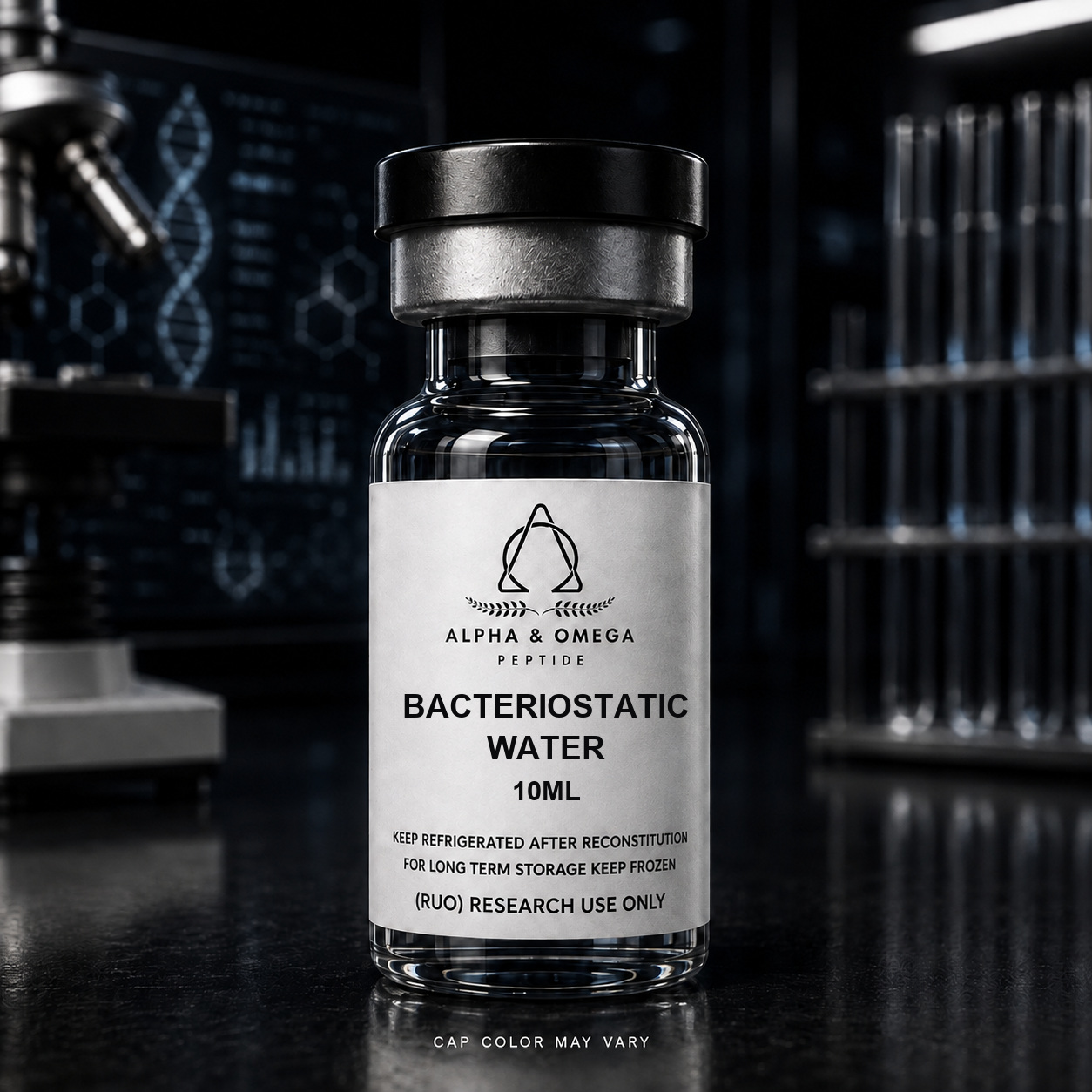
Related catalogue entries: Ipamorelin/CJC-1295 (w/o DAC) Bacteriostatic Water 10ML. These links are provided for catalogue navigation only; similarity of names does not establish equivalent composition, research evidence or suitability.
Linking note: category and related-product links are navigation aids only. They do not imply that products are interchangeable, clinically validated, authorised medicines or appropriate for human use.
Related search terms
cjc 1295 no dac blend information · cjc 1295 no dac ingredient identity · cjc 1295 no dac formulation details · cjc 1295 no dac research literature
Be the first to review “CJC-1295 w/ DAC 5MG”
Related products

Reviews
There are no reviews yet.