
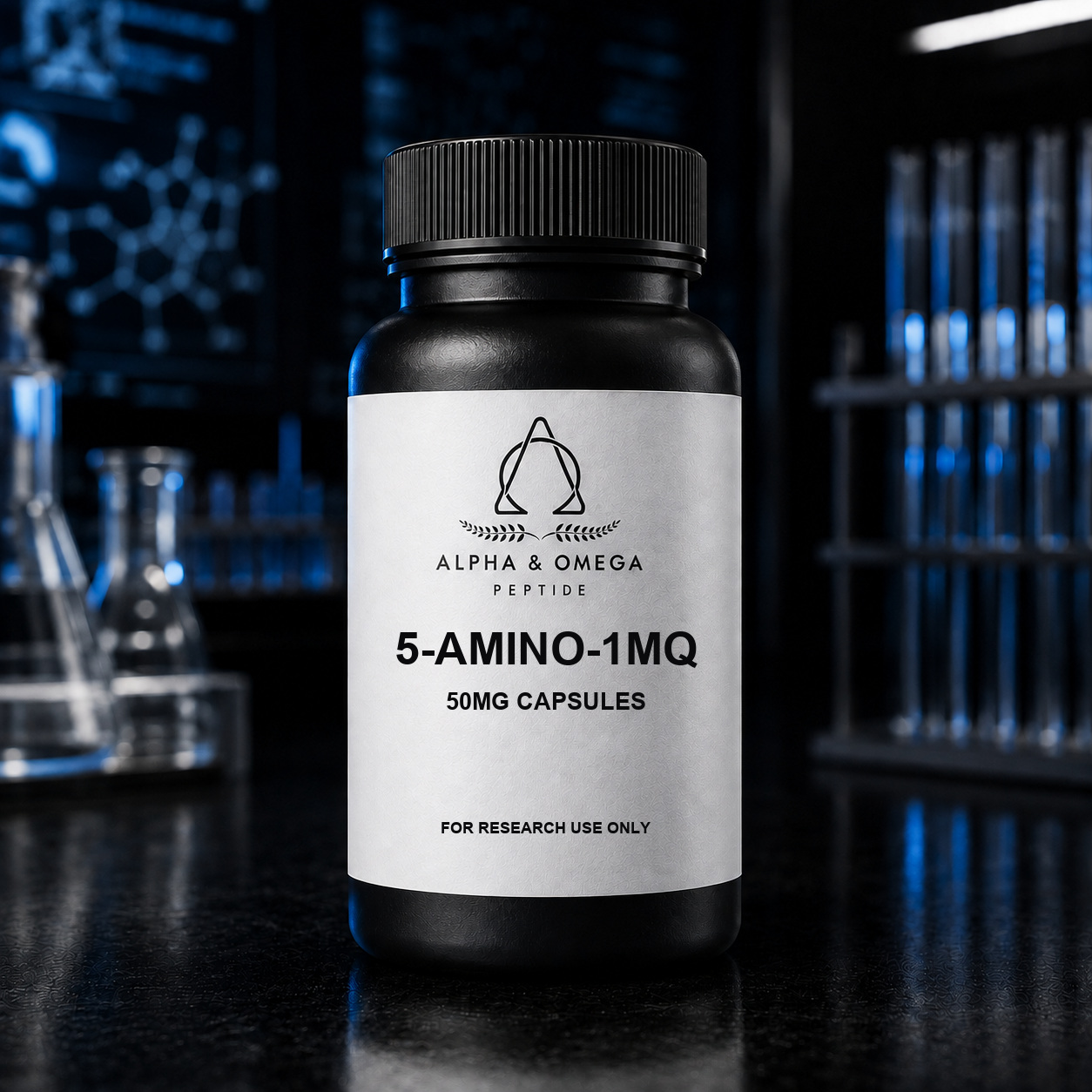
5-Amino-1MQ Capsules is the primary catalogue term for 5-Amino-1MQ Capsules. This page provides factual product-identification, terminology and documentation context; the name alone does not verify composition, quality, authorisation or suitability.
5-Amino-1MQ Capsules: identity, terminology and catalogue context
What the catalogue record confirms
The supplied record confirms the displayed name. It does not, by itself, verify the manufacturer, country of origin, exact chemical form, component ratio, excipients, sterility, purity, analytical assay, storage limits, shelf life or intended use. Those details should be copied from current manufacturer documentation, not inferred from common naming conventions or another seller’s listing.
Scientific identity and interpretation
5-Amino-1MQ is discussed in preclinical literature as an inhibitor of nicotinamide N-methyltransferase (NNMT). Mechanistic and animal findings are not equivalent to human clinical evidence. The available product name and capsule format do not establish identity, purity, bioavailability, dose equivalence or human safety.
Evidence status: Human evidence: not established by the cited preclinical research; do not infer clinical efficacy.
Formulation-specific limitations
The export does not include a manufacturer specification, certificate of analysis, complete ingredient declaration, impurity profile, stability data or independent identity testing. These details should be supplied before making claims about purity, quality, sterility, suitability or exact equivalence to published study materials.
A useful evidence review separates mechanism from outcome. A receptor interaction, biomarker change, cell-culture result or animal-model observation can support a research hypothesis, but it does not by itself demonstrate a meaningful human outcome. The strongest claims require controlled human studies of the same molecule, formulation, route and intended indication, with adequate sample size, comparator, follow-up and transparent adverse-event reporting.
How to read the research responsibly
When evaluating a publication, first identify the exact material studied: full chemical name, sequence or molecular form, purity, formulation, route and dose. Next identify the model: isolated cells, animal model, healthy volunteers or patients with a defined diagnosis. Then check whether the endpoint was a laboratory biomarker, a physiological response, a patient-reported measure or a clinically meaningful outcome. These categories are not interchangeable. A mechanistic paper can explain why researchers are interested in a molecule without showing that a product has a useful or safe effect in people.
Study design also matters. Randomised controlled trials with appropriate comparators generally provide stronger causal evidence than uncontrolled observations. Small sample sizes, short follow-up, selective outcomes, lack of blinding and incomplete adverse-event reporting reduce confidence. Reviews can help map a field, but their conclusions depend on the quality and comparability of the underlying studies. If a review discusses several formulations or routes, its conclusions should not be applied indiscriminately to this exact catalogue item.
Product documentation and quality questions
Before this page makes a factual statement about quality or suitability, the business should hold a current specification that matches the item being sold. Depending on the product type, relevant records may include a full ingredient declaration, chemical identity and sequence, batch-specific certificate of analysis, assay method, impurity profile, microbial limits, sterility or endotoxin testing where applicable, excipient list, container information, stability data and manufacturer instructions. For laboratory reagents, the grade, concentration convention, pH, solvent, hazard classification and safety data sheet are particularly important. For devices, dimensions, materials, calibration, sterility, single-use status, intended purpose and instructions for use are central. For oral or dissolving formats, amount per unit, excipients, disintegration characteristics and route-specific stability should be documented.
A certificate or test report should be traceable to the batch supplied. A generic certificate, a supplier statement without method details or a document for a different product strength is not enough to substantiate a product-specific claim. Where documents are unavailable, the correct editorial approach is to state that the specification has not been provided rather than to fill the gap with an assumption.
Regulatory and publication context in the United Kingdom
Regulatory status depends on the exact substance, presentation, intended purpose, claims and circumstances of supply. A research description does not make a product lawful to supply or advertise, and adding a “research use” disclaimer does not automatically resolve the legal position. UK medicine advertising rules restrict public promotion of prescription-only medicines and unlicensed medicines. Any product that may be a medicinal product, an unlicensed medicine or a medical device should undergo a product-specific review by an appropriately qualified UK regulatory adviser before publication or sale. Do not imply MHRA authorisation, pharmacy status, clinical suitability or a therapeutic indication unless documentary evidence supports the precise statement.
What this page can and cannot establish
This page can identify the catalogue wording, explain relevant terminology, summarise the research landscape at a high level and identify missing documentation. It cannot verify the contents of a particular vial, capsule, strip or reagent bottle; certify a batch; establish sterility; determine clinical suitability; or replace a regulator’s classification. It also cannot transfer evidence from a different route, dose, formulation or population to this listing. Readers should use the manufacturer’s current documentation and relevant regulatory sources for decisions about product identity and status.
Frequently asked questions
What does the stated amount mean?
It is the amount shown in the catalogue product name. The export does not establish the analytical assay, actual content, purity or amount per serving unless those details are separately documented.
Does published research establish the effect of this listing?
Only research that matches the same compound, formulation, route and relevant population can directly inform this exact product. General mechanistic or animal findings are not clinical proof.
What should be verified before publication?
Chemical identity, formulation, manufacturer, batch-specific analysis, regulatory status and any claims against primary research.
Scientific and technical reference
This link is a literature-search starting point or reference on the named compound. Review the individual study design and formulation before using it to support a specific claim. Review the relevant scientific or technical source.
Editorial accuracy note
Information on this page is a factual catalogue and research-context summary, not a diagnosis, treatment recommendation or instruction for human or veterinary use. It does not establish approval, efficacy, safety, sterility, purity or suitability. Confirm the exact product identity, manufacturer documentation and UK regulatory position before making publication or supply decisions.
Explore related Alpha Omega Peptides pages
For general site information, visit the Alpha Omega Peptides homepage, browse the Shop page, or read About Alpha Omega Peptides.
Browse the Research Peptides category and the Dissolving Strips category to view the site’s catalogue sections.
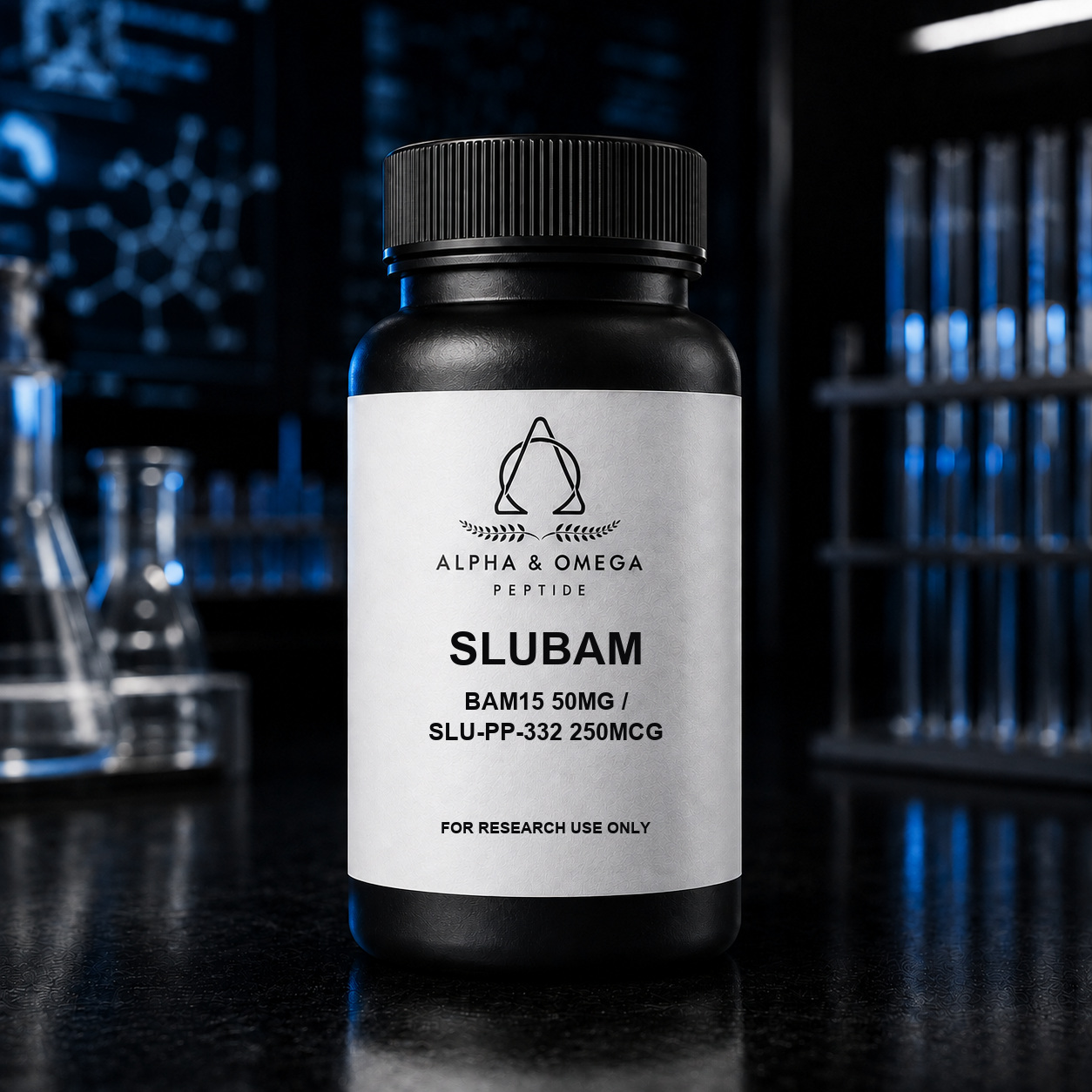
Related catalogue entries: BPC-157 500MCG Capsules SLUBAM (BAM15 50MG & SLUPP332 250MCG) 60 Capsules. These links are provided for catalogue navigation only; similarity of names does not establish equivalent composition, research evidence or suitability.
Linking note: category and related-product links are navigation aids only. They do not imply that products are interchangeable, clinically validated, authorised medicines or appropriate for human use.
Related search terms
5-Amino-1MQ Capsules capsule information · 5-Amino-1MQ Capsules ingredient details · 5-Amino-1MQ Capsules formulation information · 5-Amino-1MQ Capsules product specifications
Be the first to review “5-Amino-1MQ Capsules”
Related products
Research Peptides
Research Peptides
Reviews
There are no reviews yet.